

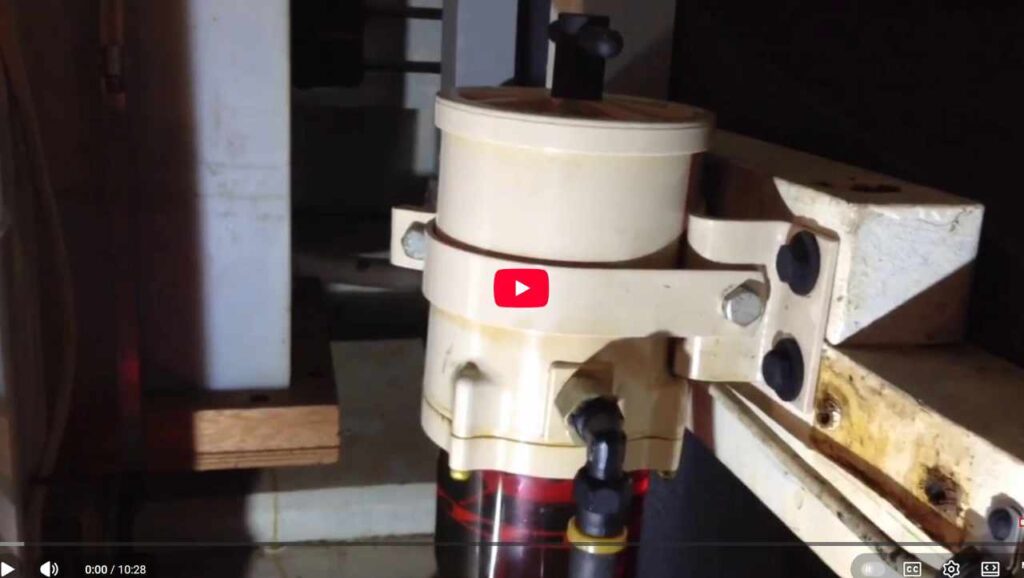
Replacing Racor Fuel Filter (2010TM)
Transcript from video
00:00:05
Hi my name is David von Wolffersdorff. Today we’re going to change the Racor primary fuel filter on a marine diesel engine happens to be a Ford layman diesel but the type or brand of engine doesn’t matter and it also makes no difference whether you’re doing it on a marine diesel or a non marine diesel. It’s the same process, it’s a very easy job to do and every boat owner should know how to do it as you never know when you might take on some bad fuel and unexpectedly have a clogged fuel filter.
00:00:38
So, it’s a very easy job – we’ll get started here okay. The first thing I’m going to show you is the parts you’ll be using. Here’s the fuel filter it’s a Racor by Parker. This is a 10 micron fuel filter and you could use as a primary filter you could use either the 10 micron or 20 micron there’s no use going any finer than that because your secondary fuel filter is two to four micron and you don’t want to have the same.
00:01:21
The filter package comes with the gasket that you’ll reinstall in the lid of the of the filter and it also comes with the small o-ring that goes on the t-handle – we’ll show you that in a minute, comes with some instructions right here and the only tool you might need is a small screw driver or a dental pick to remove the old filter. You’ll also need some containers to put the old filter in and have some rags handy but other than that it doesn’t take any specialized tools of any sort.
00:02:01
There is one other thing that you need to have and that is a small supply of some clean diesel fuel because once you’ve installed the new element you’ll need to top off the fuel filter bowl. So have some clean diesel fuel on hand okay. Here’s the primary filter – it’s located a little short distance away from the engine which is typical and you can find the the secondary filter located generally on your engine so for example this is the secondary filter on this boat engine so we’re going to first get you know if I’m putting some rags in a
00:02:49
you know something you know something to protect against spills beneath this filter I’ll probably put this put this underneath there and step one is to close the fuel petcocks from your fuel tank so for example right down here I’m gonna close this fuel petcock. If you’ve got two two tanks as I do over here is my port tank I’m going to close that petcock also you want to do that so that once you take the cap the lid off of this filter that you don’t have fuel coming out.
00:03:40
So close your fuel petcocks before you do anything so we’ll get going here on step two in just a second okay once you have a tray in place then you’re going to unscrew this t-handle that’s on that holds the lid on. I’ve already loosened it and then you’ll very carefully lift off this lid and we’ll remove the filter here okay I remove the the t-handle it’s got that rubber o-ring on there which will replace in a few minutes to set this in a safe place and then in the second here we’ll lift off this lid
00:04:17
and remove the old filter cap lift it off the lid and the the gasket for the lid stayed on the top there so we’ll lift that off and then we’ll pull out the filter in just a second here okay to lift out the old filter there are these plastic handles and you may need to take as I did here a small screwdriver to fish that handle out it’s hard to reach if you have normal science fingers there’s another one on the other on the opposite side so you lift you get those out then you just lift the filter right out.
00:04:55
Okay just grab the handles and twist it and it will lift right out okay there’s the old filter and just set it in your tray and then we’ll grab the new filter and put it in okay. When installing the new filter you just look for that pipe that goes up the middle and then you just set the new filter on that and gently twist it slowly and push it down and that’s all there is to it. Now we’re gonna get our clean fuel and top off the this fuel reservoir here one more thing I’m going to suggest you do
00:05:38
is that you with a container beneath that open this this valve here and let some fuel run out of this of this bowl here because dirt and water settle down on the bottom of this bowl and so now and then whenever you change those filters not a bad idea to let that some fuel run out there so we’ll do that next year okay we’re letting some fuel run out I’ll open a little bit more so a little more fuel comes out and then we’re rapidly and then just snug it tighten it back up okay.
00:06:16
I just took my clean diesel fuel and I poured it in the canister here you can pour it down that pipe around the the new filter and fill it up so that it slightly overflows and of course you’ve got your tray down here so no no harm and this way you won’t have to bleed your fuel system okay. Next step is to take your new gasket and for the lid and set it in this opening here make damn sure you don’t twist it that’s critical make sure it’s completely flat all the way around or you’ll have problems a week
00:07:01
It so now we’re gonna set this on top of the fuel filter reservoir so make sure that gasket is completely flat all the way around okay next thing we’re gonna do is remove the old o-ring on the T-handle – just take a dental pick or a some fine screwdriver or just roll it off by hand just get it off and then install the new one okay. I just installed the new one and now we’re gonna install it in the lid so just set it in position make sure you don’t cross the threads and then snug it down very simple don’t go berserk tightening.
00:07:58
I just tighten it snuggling and then wipe up you’ve got be some fuel dripping just go ahead and wipe that up you’re virtually done here okay after you’ve wiped things down then don’t forget to reopen your fuel petcocks both sides and what you should do now is start your engine. Make sure that it runs fine because it’s possible you got some air and there but because of the way we poured clean fuel in the the bowl here you shouldn’t have any problem you should not have to bleed the fuel system
00:08:41
So I’m going to start this engine here and make sure that it starts and runs just fine as I said should be no problem because we’ve poured that clean fuel in there essentially priming the fuel system. So that’s it – easy job as you can see and enjoy enjoy your diesel engine and your boating okay. I just started the engine started up just fine and that’s I’m sure what you’ll experience also if for any reason it doesn’t you need to bleed the fuel system and
00:09:22
we won’t cover that today because I don’t need to do it so good luck and enjoy your easel engine and your boat. Goodbye – one last thing I forgot to mention about priming the fuel filter is that you can often avoid pouring in the fresh fuel like I did if you simply before you put the lid on if you simply open your fuel petcocks if your fuel tanks are full enough then the fuel will run will fill the filter gizmo and then you can once it’s filled and slightly over flowing then you can put the lid on and screw it down
00:10:11
and you can avoid having to pour the the fuel in like we did but that’s it. Thanks much goodbye
Click on image to view video
Zoekopdracht
Ondersteuningsvideo's
Gerelateerde producten
Racor 2010149W brandstofpatroon (100 micron)
Racor 2010PMOR brandstofpatroon (30 micron)
Racor 2010SMOR brandstofpatroon (2 micron)
Racor 2010TLOR brandstofpatroon (10 micron)
Racor 2010TMOR brandstofpatroon (10 micron)
 Dutch
Dutch  English
  German
  French
  Spanish
  Italian